

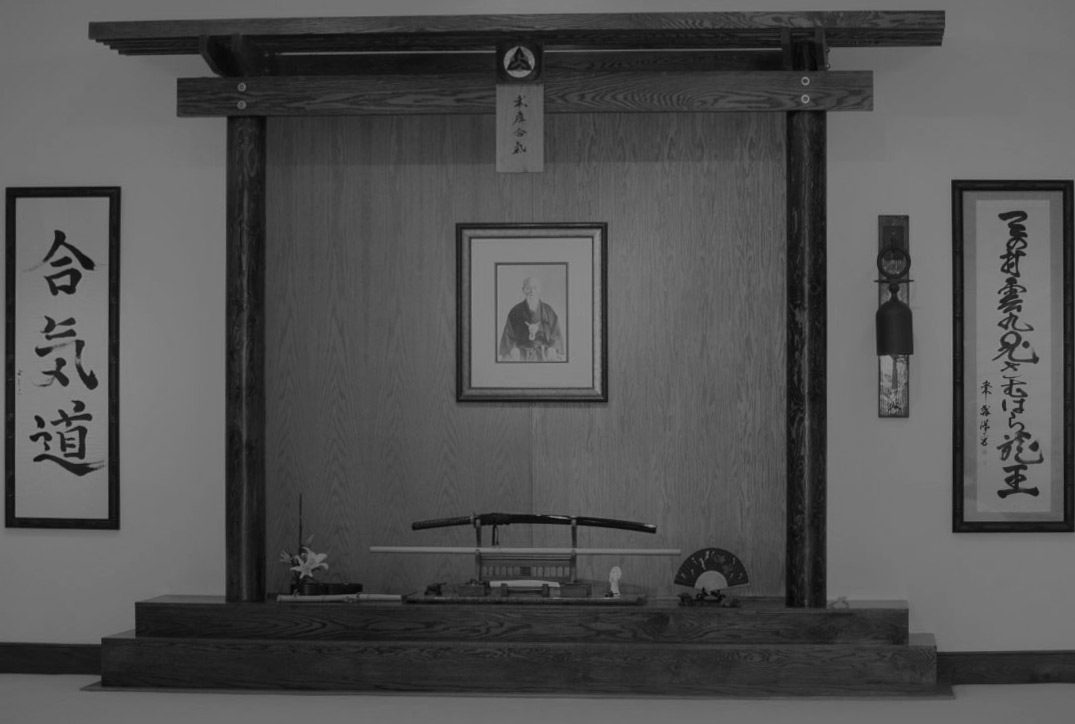
Aikido is a modern Japanese martial art focused on self-defense through non-resistance and redirection. Rather than meeting force with force, an Aikido practitioner uses joint locks, pins, and circular throws to turn an attacker's own strength and momentum against them. The goal is to subdue an opponent without causing serious harm, blending with the incoming attack and leading it off balance. This approach requires timing, balance, and sensitivity to the opponent's movements, allowing a smaller or weaker person to neutralize a stronger attacker by skillfully redirecting energy.
Aikido training develops both the body and mind. Practitioners learn to stay relaxed yet focused, maintaining mental calm and control even under pressure. In essence, Aikido works by teaching you to harmonize with an opponent's motion - joining it rather than clashing - so you can safely diffuse aggression. It's often described as "the way of harmonious spirit," reflecting its core principle of resolving conflict in a peaceful but effective manner.
Aikido was created in the early 20th century by Master Morihei Ueshiba (1883–1969), often referred to by the title O-Sensei (Great Teacher). Ueshiba was an expert in traditional jujitsu, swordsmanship (kenjutsu), and spear fighting, and he combined these arts with his spiritual beliefs to form a new martial art. He originally developed Aikido (which evolved from Daitō-ryū Aiki-jūjutsu, an older art) as a synthesis of his martial studies and philosophy. Ueshiba’s goal was to create a discipline that practitioners could use to defend themselves while also protecting their attacker from serious injury – a radical concept compared to more destructive fighting arts of the time.
The name “Aikido” itself was officially adopted around 1942, when Japanese martial arts were being reorganized and Ueshiba’s art was distinguished from jujutsu. After World War II, Aikido spread rapidly. Ueshiba’s students opened schools worldwide, and today Aikido is practiced in roughly 140 countries. The art's origins are deeply rooted in Japanese samurai traditions, but Ueshiba’s innovative approach and emphasis on harmony transformed those techniques into the unique martial art we now know as Aikido.
Traditional Aikido is non-competitive and promotions do not come through besting an opponent, but through demonstrating understanding of basic exercises and techniques, which become more demanding or difficult as rank increases. In Aikido we strive to work in cooperation with a partner, still employing effective technique against an energetic and realistic attack, yet doing so by blending with the attack and redirecting its energy back to the attacker. We practice techniques against a variety of attacks such as kicks, punches, strikes, single-hand or two-hand grabs from the front or rear, chokes, multiple person attacks, and attacks with weapons.
In all of these we strive to resolve the conflict in a non-lethal, non-disruptive, yet effective manner. Techniques may end in joint locks or immobilization, or in dynamic motions where the attacker is thrown forwards or backwards across the mat, or through the air into a spectacular breakfall. Rather than primarily linear motions, Aikido is comprised of blending, turning, pivoting, circling, and spiraling. We are learning to deal not only with our own energy, but with that of an attacker or another person (or people) as well. Aikido embodies concepts which are at the same time very simple, yet very complex. Because of these and other differences, Aikido can be very challenging to learn, yet at the same time can be very rewarding because it is ultimately bringing us into harmony with ourselves and with our world, and helping us to become more complete and integrated human beings.
To start training in Aikido, it is necessary to find a dojo (place to train) near you. Sources of information on dojo location include the internet, phone company yellow pages, street signs, and Aikido-related magazines. You should visit any school you are considering, to see first hand what the school, instructor, students, energy, and training are like. Stay clear of schools who do not let observers in or who do not give you a welcome or comfortable feeling.
Remember that the energy or ‘vibes’ of a school comes from that of its members, and those are the people with whom you will be working and training closely. Choose accordingly! The school should also be accredited by a national organization, and the instructors should have legitimate certifications. Ask whether the dojo offers an introductory or trial membership. Some offer introductory-level classes or six- to eight-week sessions as an ‘Introduction to Aikido’. This type of course is a good way for you to try the art and see if it is for you. Once you have found a dojo and decided that you'd like to train or continue training, you should try to attend classes at least two times per week. Once a week is good for a basic introduction, but for actually learning and retaining the material, it is better to attend classes more often, as your schedule and outside commitments allow.
Thank you for your interest! The first step in your dojo joining AAA is to ask for affiliation. You should send us an official letter, which should include your contact information, reason for the request, and some brief information about your current Aikido and dojo status. Once we receive your request, we will contact you regarding the next step. Please contact us if you want to pursue affiliation. Thank you again for your interest in AAA. Be sure to read the information on our web site, especially AAA Services.
Aikido Association of America was founded by Shihan Fumio Toyoda. Its goal, as defined by Shihan Toyoda, is to raise and maintain the quality of American Aikido instruction at its highest level. Towards this end, AAA emphasizes strong Aikido technique, legitimate instructors, and a clear teaching methodology. The organization provides support and guidance to its instructors, members, and affiliated dojo. It offers standardized test requirements, training seminars and camps (local, regional, and national), and instructor training and certification. Shihan Toyoda, known for his powerful and dynamic Aikido as well as for his unique and effective teaching methodology, was approachable by students of all levels. He was also more than willing to share his method of teaching and what he’s learned in his more than 40 years of Aikido experience. His personal goal, and the guiding vision of Aikido Association of America was to promote Aikido. Please see AAA Services for more detailed information on what Aikido Association of America has to offer.